
Career Hub
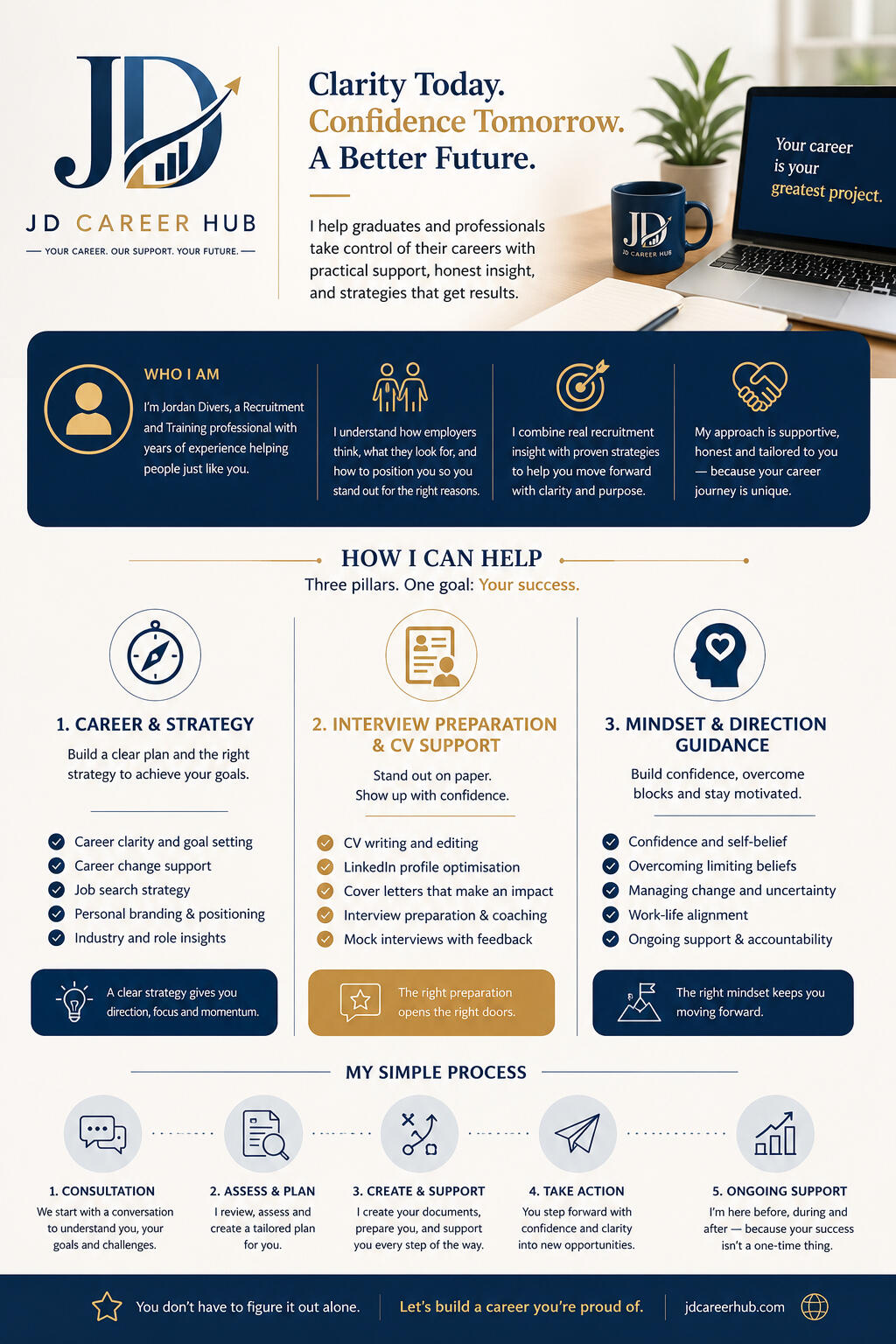
Cut Through the Noise: Navigating the Recruiter–Candidate Divide With ConfidenceWe talk a lot about job search strategy, preparation and mindset on this Career Hub. But at the core of every job seeker’s experience lies a fundamental tension that is not often discussed directly.Why does it sometimes feel like recruiters and candidates are speaking completely different languages, even when both sides want the same outcome?Today, we are digging into that question. Not just to unpack the feelings behind the disconnect, but to anchor it in real data about how the labour market has changed and how recruitment operates today. Most importantly, we will return to what you can control.1. The Job Market Has Shifted, and Not Always in Favour of SimplicityMany career commentators still lean on the idea of a “candidate-led market.” In certain specialist or highly technical sectors, that remains true. However, broader data shows a cooling employment environment, even if headline unemployment figures do not always reflect this immediately.In the UK:Unemployment has risen to around 5.1 percent in late 2025, its highest level since early 2021.Job vacancies are now below pre-pandemic levels, increasing competition for available roles.Longer hiring timelines are becoming the norm, with employers taking weeks or months to make decisions.Across multiple sectors, hiring volume has slowed, and major recruitment firms are reporting declining placement activity. This reflects increased employer caution rather than a lack of capable candidates.This shifting landscape means job seeking is no longer a straightforward sprint. It is more complex, more competitive, and often more ambiguous. That ambiguity creates noise and leaves room for conflicting advice and opinions.2. Recruiters Are Important, but They Are Not All-Knowing GatekeepersTo understand the growing tension between recruiters and candidates, it helps to look closely at who recruiters are and the constraints they operate within.Recruiters Are Often Not Industry SpecialistsEspecially on the agency side:Many recruiters are early in their careers.Training focuses heavily on process rather than deep industry understanding.They often work from job descriptions written by HR teams or senior stakeholders who are removed from the day-to-day reality of the role.As a result:Job requirements are interpreted literally rather than holistically.Transferable skills and contextual experience are frequently overlooked.This is not a criticism of individuals. It is the natural outcome of a recruitment model that prioritises speed, volume and standardisation.The Decline of the True Consultant ModelThe traditional recruitment consultant, someone who deeply understood an industry, assessed capability beyond keywords, and advised both client and candidate strategically, has become increasingly rare.Today, many recruiters are:Managing multiple roles at onceMeasured on response times and placementsRelying heavily on applicant tracking systemsThis approach increases efficiency but reduces nuance. The outcome is faster screening and less meaningful evaluation.3. Job Descriptions Often Fail to Reflect Real WorkAnother source of frustration sits quietly in the background. Job descriptions themselves.Many are:Written by committeeReused year after yearOverloaded with buzzwordsDetached from how the role actually operates in practiceAt the same time, organisations increasingly talk about skills-based hiring. While skills are supposedly prioritised, many systems and processes are still poorly equipped to assess them properly.Applicant tracking systems continue to screen candidates rigidly. Highly capable professionals are often filtered out simply because their experience is not phrased in the expected language.This is where the noise truly lives. Between what employers say they want and how hiring actually happens.4. Candidates Still Know the Role BestDespite the complexity of the market, one truth remains constant.You know the role you are pursuing better than most recruiters do.You understand:The reality of the workThe challenges involvedThe skills that genuinely matterHow your experience translates in practiceRecruiter feedback is one data point. It is not a final verdict.One recruiter’s rejection is another recruiter’s perfect match. An opinion shaped by a brief, a checklist or a system does not define your capability.Listening is important. Internalising every piece of feedback is not.5. How to Stay Grounded and EffectiveNavigating this environment requires balance. Adaptability without self-doubt. Openness without losing confidence.Here are practical ways to stay grounded:Know Your NarrativeBe clear on the value you bring, the problems you solve, and the impact you have delivered. This clarity becomes an anchor when external opinions conflict.Translate, Do Not DiluteLearn how to translate your experience into the language of job descriptions without shrinking or oversimplifying your expertise.Contextualise Recruiter FeedbackTreat feedback as information, not judgement. Ask what brief they are working from and what constraints they face.Build Broader Feedback LoopsBalance recruiter input with insights from peers, mentors, hiring managers and industry professionals. This wider perspective prevents over-reliance on any single voice.6. You Are Not Powerless in a Complex MarketThe job market is noisy. Advice is contradictory. Hiring decisions are often opaque.But the data is clear:Jobs still exist, even as competition increases.Skills matter more than ever, even if systems struggle to assess them properly.Candidates with clear positioning, confidence and strategy consistently perform better.The market will continue to shift. What should not shift is your belief in your own experience and professional worth.Your career is bigger than one recruiter’s opinion.Ready to Cut Through the Noise?If recruiter feedback is clouding your clarity, or if the job search process feels overwhelming, support can make a significant difference.Whether you need help refining your CV, strengthening your interview strategy, or positioning your experience more effectively in the market, my services are designed to bring focus, confidence and direction back into your job search.If you are ready to move forward with clarity and intent, I am here to help.
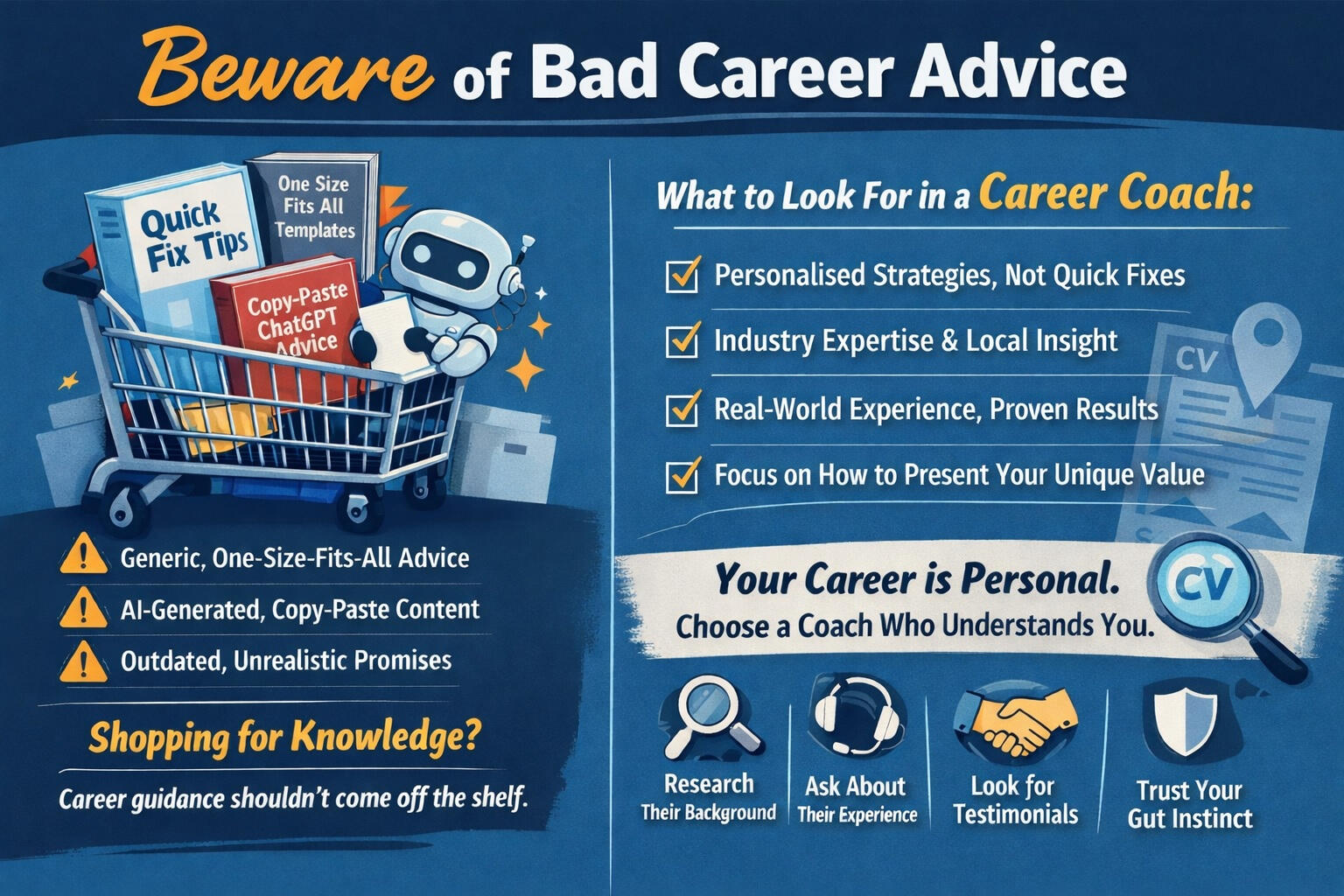
Beware of Bad Career Advice and Why One Size Does Not Fit AllIf you spend any time online looking for career advice at the moment, one thing becomes very clear very quickly. There is a lot of it.Scroll through LinkedIn or other platforms and you will see advice telling you exactly what your CV should look like, what not to say in an interview, or which template will supposedly guarantee success. Some of this advice is not wrong, but much of it is repeated, copied, or shared without enough context.Careers are personal. They are shaped by industry, location, experience, personality, and timing. Advice that works well for one person can be completely wrong for another.The problem with copy and paste career adviceThe way we work and hire has changed, but much of the advice being shared online has not changed with it.Generic career tips often ignore industry expectations, local job markets, seniority level, and how organisations actually make hiring decisions. They also tend to ignore the individual behind the CV.A graduate entering the job market does not need the same advice as someone changing careers, returning to work, or moving into leadership. When advice lacks context, it can become confusing and sometimes damaging.When your CV is not the issue but perspective isMany people I work with have already spent hours or days working on their CV or cover letter. They have rewritten it multiple times, followed advice they have seen online, and still feel stuck.This is often because they have gone word blind.When you are too close to your own document, it becomes very difficult to see how you are actually coming across. You know what you mean, but that does not always translate clearly to someone reading it for the first time.A CV is not just about what you have done. It is about how someone else understands your experience.Careers are about behaviour as much as documentsOne of the most important parts of career development is understanding how you are perceived by others.This includes how you communicate, how confident you sound, how you talk about your experience, and how you respond in interviews or professional conversations. These things are often invisible to us without honest feedback.Good career support helps you step outside of yourself for a moment and see your career through someone else’s eyes. That kind of insight cannot come from a template or a checklist.Why personalised career support matters nowWork looks very different to how it did even a few years ago. Career paths are less linear, roles are evolving, and people are staying in work for longer. Many are rethinking what success actually means to them.Personalised career support helps you make sense of this. It gives you space to reflect, gain clarity, and develop a strategy that fits who you are and where you are now.For graduates, this often means learning how to communicate potential and transferable skills. For those further along in their careers, it can mean redefining direction, confidence, or identity in a changing world of work.Using online tools and AI with careOnline tools and AI can be useful when they are used well. The challenge is knowing when they are helping and when they are flattening your individuality.Generic outputs can make people sound the same. Good career guidance helps you use these tools thoughtfully, without losing your voice or credibility.What good career support really looks likeAt its best, career support is about honesty, insight, and perspective.A good Careers Advisor or Coach offers informed feedback, understands recruitment and hiring realities, and works with you as an individual. It is not about telling you what you should want, but about helping you present yourself clearly and confidently.Often, the most valuable part of the process is not changing your CV, but changing how you see yourself and how you talk about your career.A final noteIf you are looking for career support that is honest, practical, and tailored to you, you are very welcome to get in touch.I work with graduates and experienced professionals who want clear, thoughtful guidance based on real recruitment and training experience, not recycled advice or generic templates. Whether you need a fresh perspective on your CV, support preparing for interviews, or space to think through your next steps, we can work through it together.Sometimes all it takes is a second set of experienced eyes and an honest conversation to bring clarity.If that sounds helpful, feel free to reach out.___________________________________________________________________________________________🎤 Interview Preparation: Myths, Mindset and Methods That Actually WorkInterviews have a strange way of turning even the most confident people into bundles of nerves. You know your skills, you know your value, but when it’s time to sit across from a hiring manager, everything suddenly feels like a test you might fail.The good news? Most of what people think about interviews is either outdated or flat-out wrong. Here are some common myths, and the truths that will actually help you perform better.❌ Myth 1: You Need to Have All the “Right” Answers
Many candidates believe interviews are about memorising perfect responses. But hiring managers aren’t looking for rehearsed lines. They’re looking for authenticity and clarity of thought.Try this: Studies in communication show that interviewers remember stories, not bullet points. Instead of cramming model answers, prepare three or four strong stories that highlight your skills, challenges you’ve overcome, and results you’ve delivered. Anchor your answers around these stories and adapt them naturally.❌ Myth 2: It’s All About Impressing Them
An interview is not a one-way performance. Candidates often forget they’re also assessing the employer.Try this: Flip the frame. Asking thoughtful questions like “What does success look like in the first 6 months?” shifts the power dynamic and shows you’re serious about fit, not just desperate for the role. Confidence often comes from remembering that you’re interviewing them too.❌ Myth 3: Nerves Are a Bad Thing
People panic about feeling nervous. But nerves are a sign your body is gearing up for performance. It’s the same adrenaline athletes feel before competing.Try this: Instead of trying to calm down, reframe nerves as excitement. Research shows people perform better when they reinterpret anxiety as energy. Next time, tell yourself: “I’m excited.” It works.Another approach?Acknowledge it. In How to Argue and Win Every Time, lawyer Gerry Spence suggests that openly admitting, “I’m actually a little nervous,” can be disarming. It instantly levels the playing field, makes you relatable, and often puts both you and the other person at ease. What could feel like a weakness actually becomes a strength, softening the atmosphere and opening up a more honest conversation.❌ Myth 4: The Best Candidate Always Gets the Job
Here’s the hard truth. It’s not always about being the most qualified. It’s about being the most memorable and the most aligned to what they need right now.Try this: Mirror their language. Subtly adopting the same keywords and tone they use builds rapport and signals cultural fit. This is unconscious psychology at play, and it works.How I Can Help-Interview skills are like muscles. You strengthen them with practice, feedback, and strategy. That’s where I come in.-Through mock interviews, tailored feedback, and proven techniques, I help clients:
-Identify and refine their strongest stories
-Build confidence in their delivery
-Learn strategies for handling tough or unexpected questions
-Understand the psychology behind influence and persuasionIf you’re preparing for interviews and want to stop second-guessing yourself, check out my Services Page.My Interview Prep Sessions are designed to give you the clarity and confidence you need to perform at your best.___________________________________________________________________________________________🔑Top 5 Career Tips for Job Hunters This WeekThe job market can feel overwhelming right now. Applications disappear into the void, job boards are crowded, and AI tools are scanning CVs before a human even sees them. But there are always ways through the noise. Small, deliberate shifts in how you approach things can make all the difference.
Here are five things to keep in mind this week if you’re job hunting.1. Skills Speak Louder Than DegreesEmployers are waking up to the fact that not everyone’s path is straight. More companies are choosing skills over titles, ability over degrees. That means the door is open wider than you might think.
Try this: Stop hiding behind job titles. Show people what you can do. Projects, volunteering, certifications, these often speak louder than the degree on your wall.2. Don’t Apologise for the GapsOver half of people have career gaps on their CV. Life happens, and it makes you more resilient, not less employable. The key is how you explain it.
Try this: Instead of writing “career break,” tell the story of what you gained. Did you build resilience? Learn something new? Manage responsibilities no job could prepare you for? That’s the value.3. Use AI, But Don’t Become ItAI is shaping the hiring process. Yes, you need the right keywords, the clean formatting, the ATS-friendly CV. But here’s the truth: AI can’t replicate you.
Try this: Optimise for the robots, but write for the humans. Add the personality, the story, the spark that makes someone remember you when they close the screen.4. Keep Applying But Start ConnectingThe harsh truth? Applying to 100 jobs on Indeed won’t get you very far. Opportunities often come through people, not platforms.
Try this: Message someone on LinkedIn. Comment on their work. Reach out to an alum in your field. One thoughtful connection can open a door that 50 faceless applications never will.5. Resilience Beats PerfectionEmployers aren’t waiting for the perfect candidate anymore. They’re looking for people who can adapt, learn, and stay steady when things get tough.
Try this: Stop chasing the illusion of ticking every box. Start showing up as someone who’s willing to grow into the role. That’s the kind of person people want to hire.Why This MattersBecause job hunting isn’t about becoming flawless. It’s about showing the real you in a way that connects your skills, your story, your potential. The system may be noisy, but the people behind it are still looking for something human.Further Reading62% of Workers Have Resume Gaps. Here's How to Re-Enter the Workforce With Confidence - Investopedia
https://www.investopedia.com/62-percent-of-workers-have-resume-gaps-heres-how-to-re-enter-the-workforce-with-confidence-11763375Looking for a graduate job? Don’t spend ages on Indeed – The Times
https://www.thetimes.co.uk/article/first-time-graduate-job-hunt-websites-7gpcvt2rjHR Expert Shares 3 Key Strategies to Land a Job in Today’s Tough Market – Economic Times
https://economictimes.indiatimes.com/magazines/panache/hr-expert-shares-3-key-strategies-to-land-a-job-in-todays-tough-market-we-are-not-in-a-market-for-perfection/articleshow/123435664.cms___________________________________________________________________________________________The Silence After the Interview and Why It’s Not Just YouIf you’ve been scrolling LinkedIn lately, you’ll have noticed the latest wave of frustration: interview silence.You do the hard work, polish your CV, tailor your application, prepare your answers, show up to the interview, and then… nothing. No call. No email. No feedback. Just silence.And you’re right: it’s a horrible practice. Hiring managers and recruiters should know better. Candidates deserve respect. But here’s the uncomfortable truth: Over here, we deal with reality. And the reality is, this silence isn’t going away anytime soon.The Bigger Picture: Competition Has Never Been TougherIt’s not just you. The silence after interviews is part of a bigger trend, applications are flooding in at record levels:UK job seekers surged in June 2025 at the fastest rate since the pandemic, with unemployment hitting 4.6%, the highest since mid-2021. (The Guardian)Applications per vacancy are at record highs. In late 2024, there were nearly 49 applications per job, a 286% increase year-on-year. (Employer News)In some industries, competition is staggering: retail, hospitality, and manufacturing often see 120+ applicants per vacancy, while HR roles now average 129 applicants. (Wave RS)When you combine more applicants with stretched recruiters (many of them phone-shy and relying on emails or ATS systems), the silence makes sense. Not acceptable, but understandable.What This Means for Job Seekers at Every LevelWhether you’re just out of university or leading at boardroom level, the message is the same: you can’t control the silence. What you can control is how you respond.For Early Career ProfessionalsDon’t wait endlessly, stay proactive. Apply broadly, but focus on quality applications.Learn to tell your story in a way that stands out in ATS filters.Treat silence as noise, not a verdict. Keep momentum.For Senior ExecutivesTarget wisely, don’t apply for every senior title, choose where you’re a real fit.Quantify your leadership impact: “Reduced costs 20% while leading a 200-person team.”Reframe your experience: “I’m here for impact, not to climb.” This counters assumptions about being “overqualified.”Use referrals and direct outreach, your network still opens doors better than any algorithm.Final ThoughtThe silence isn’t a reflection of your value. It’s a reflection of a crowded market, overstretched systems, and the messy reality of modern hiring.Your job is to keep moving. Stay proactive, sharpen your story, and focus on the roles where you bring clear, measurable value.The landscape has changed, but the map still works if you follow it with strategy and purpose.
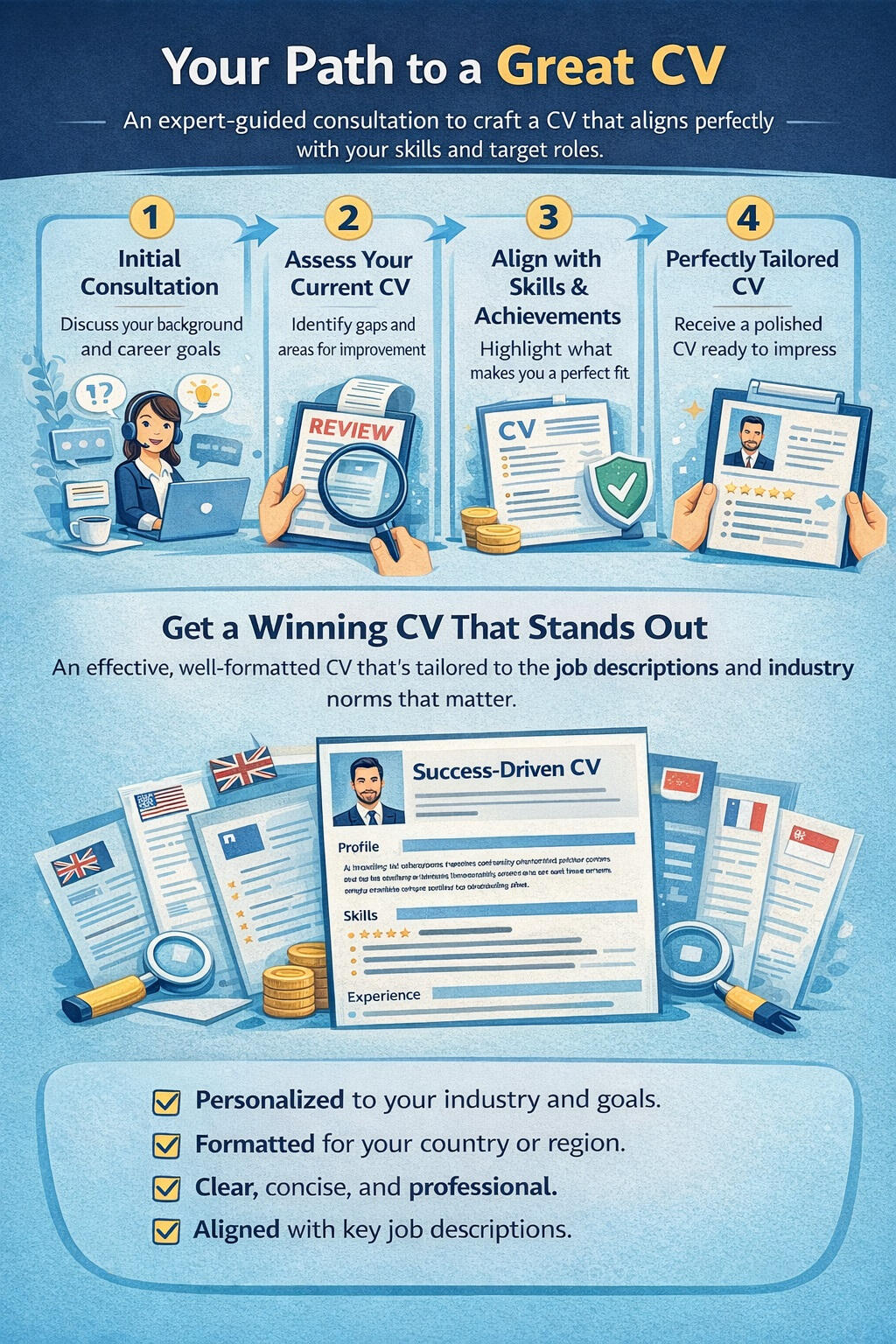
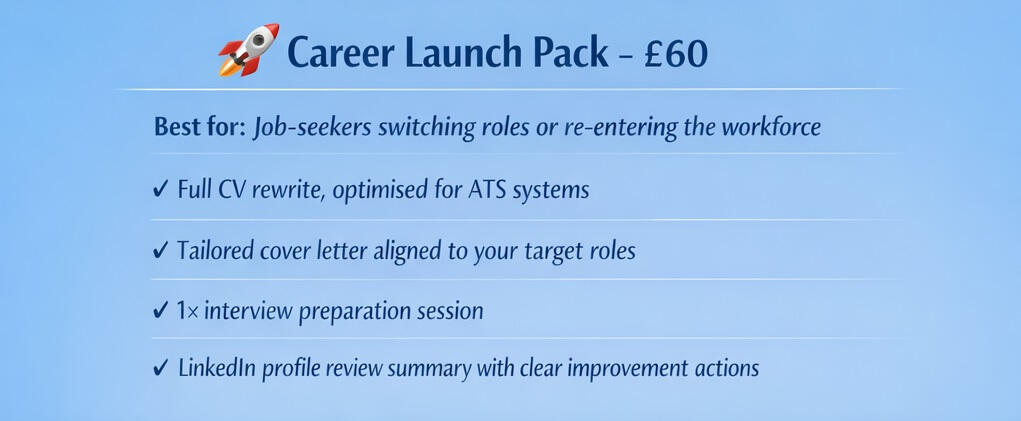
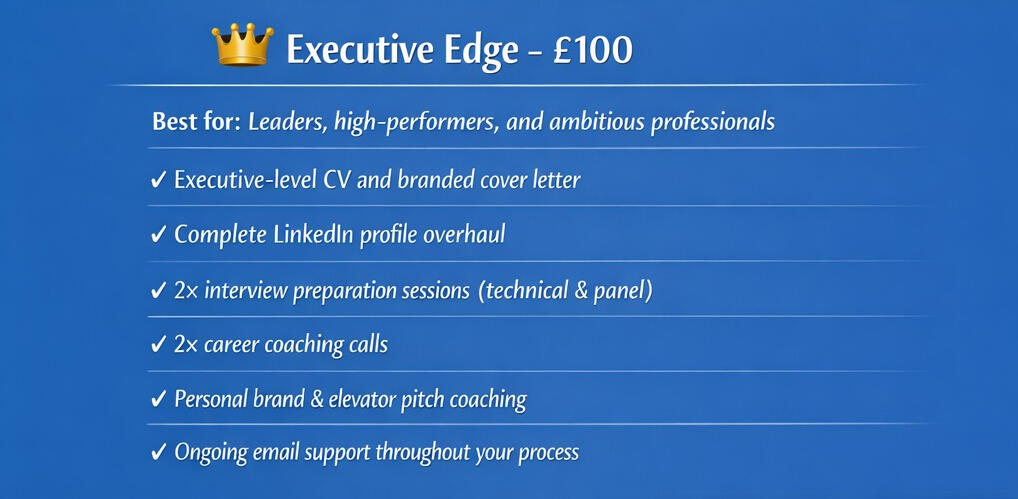
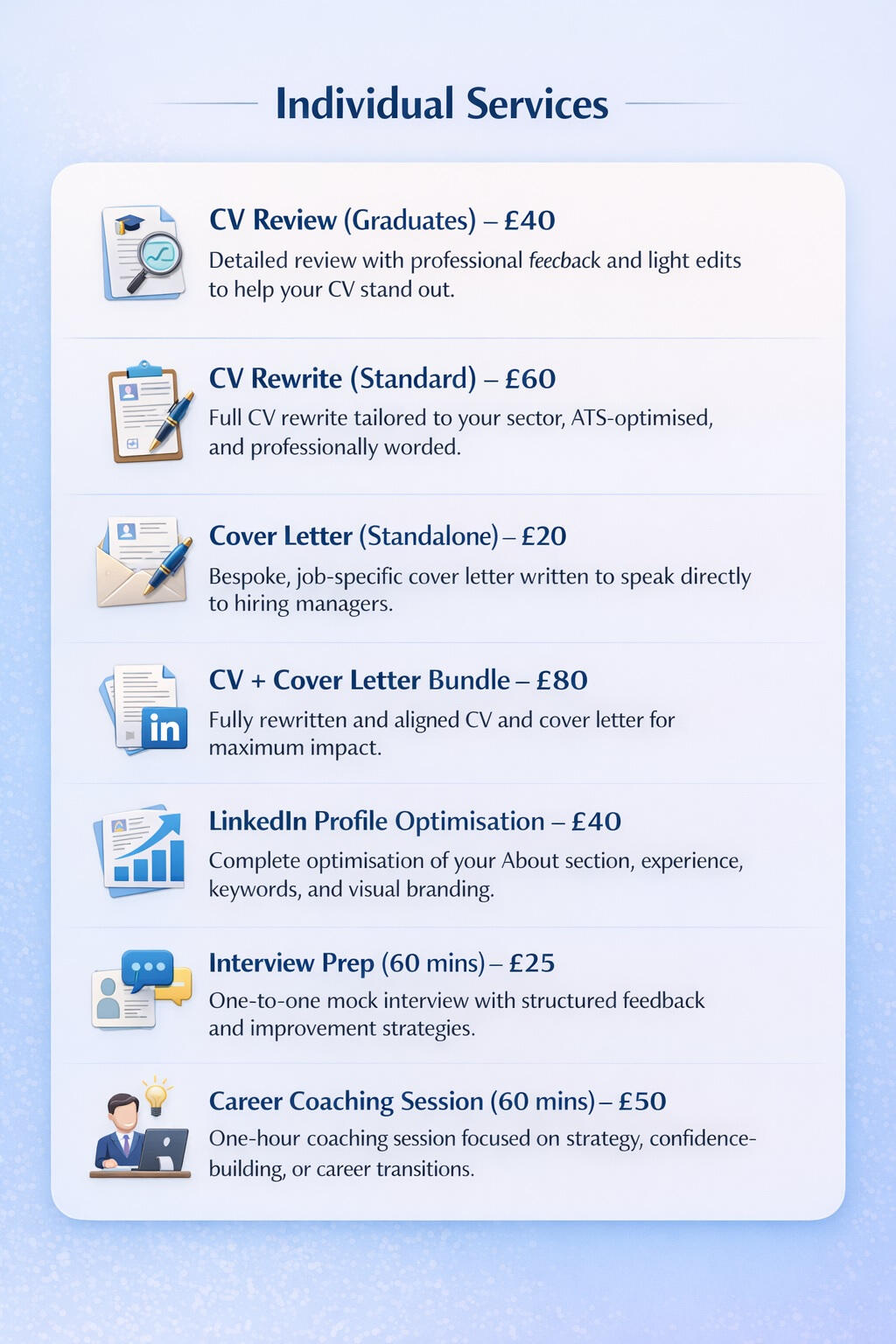
Explore My Insights
Looking for tips, guidance, and real-world advice on career development? Check out my regular blog posts, where I share strategies for CVs, interviews, career transitions, and more. Each post is designed to help you navigate your next steps with clarity and confidence.Stay connected, gain fresh perspectives, and discover resources to support your professional journey.
Disclaimer:
All services offered through this website, including CV editing, career advice, and coaching, are provided on an individual, case-by-case basis. While guidance is informed by experience and best practices, outcomes may vary depending on personal circumstances.Payment for services is required upfront to secure your booking and confirm commitment. Due to the nature of these services, refunds are not available unless the service agreed upon has not been delivered within a reasonable timeframe and quality.This service does not guarantee job placements or interview opportunities; however, its purpose is to provide the tools, guidance, and support to help you achieve your career goals. All personal and professional information shared is treated with strict confidentiality and stored securely.This service does not provide, and does not claim to provide, legal, financial, health, or other professional advice.